
Jewelry LIquids - Pickle, Neutralizer, Water, Ultrasonics
Introduction
There are a few chemicals in use in the jewelry area. Liquids, even water should be clearly labeled.
Safety
Wear safety glasses when working with acids. Never immerse your hand in the pickle or a running ultrasonic.
Common Hazards
-
Serious eye irritation. Acids will burn through clothing and irritate skin.
- The acids are heated, this will add to the effect of the acid. Flush skin with water immediately after contact.
- Ultrasonic cleaner contains ammonia. Never mix it with other solutions. Damage to skin is minimal, but will dry and irritate.
Uses
Pickle - removes firescale from soldered materials. (Sodium Bisulphate acid)
Neutralizer - neutralizes the acid so that the piece can be handled safely (baking Soda)
Ultrasonic cleaning solution - Breaks down buffing compounds (soap and ammonia)
Magnetic pin tumbler or rotary tumbler - uses liquid burnishing compound to break surface tension allowing the pins to slide across the surface. Unlike the ultrasonic, this process will burnish the surface to a shine. This should not be used to remove buffing compound or firescale.
Materials that can and can't be used.
Silver, copper, brass
Never use steel or ferrous metals in the jewelry area, especially not in the pickles.
Use plastic or copper tongs, never put ferrous metals in the pickle.
The tools
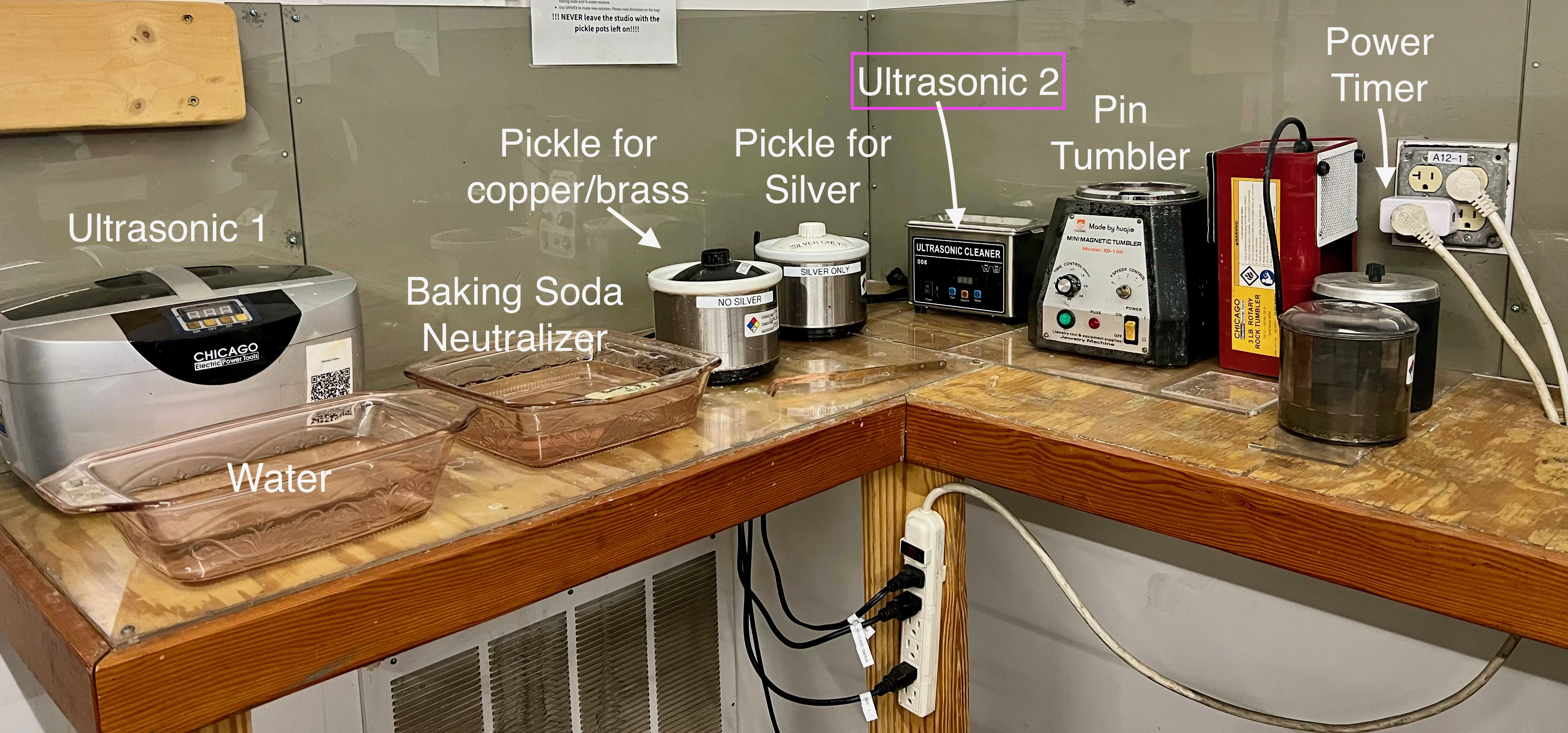
What the solutions are, how and when to replenish
Pickle (brand name Sparex, Sodium Bisulphate)
Setting Up - For 10oz warm water in the pickle pot, use up to 2 tablespoons of Sparex.
When mixing acids, always start with the most dilute solution first (water) then add the acid.
- Dissolve: Heat the pot to roughly 125° F to 150° F and stir with copper tongs until the granules are fully dissolved.
- Usage: Always use Copper Tongs to handle metal, as steel or iron will contaminate the bath.
The solution is depleted when it takes on a bright blue color and it no longer removes firescale.
- It means your pickle is working: The color change indicates the acid is doing its job by removing surface oxidation. [1, 2]
- It signals when to change the batch: Fresh Sparex pickle is clear. As the liquid gets darker and turns deep blue-green, it is loaded with copper ions and its cleaning power is becoming depleted. [1, 2, 3, 4]
- Watch out for "copper plating": If you accidentally introduce a steel tool (like steel tweezers or binding wire) into a blue pickling bath, it causes a chemical reaction that forces the dissolved copper to plate right back onto your silver piece. Always use copper, plastic, or brass tongs. [1, 2, 3]
Neutralizer (Sodium Bicarbonate)
Warm water with just enough Baking Soda (Sodium Bicarbonate) to dissolve in the water, a couple tablespoons. You will know it is working when items from the pickle fizz a little bit when added.
Ultrasonic cleaning solution
We have a couple of proprietary solutions, one is a liquid, another granular. Mix according to package directions. It will work even when dirty, but it's nice to see the bottom of the tub. Be sure the level is above the Minimum line.
Magnetic pin tumbler or rotary tumbler
Contains surfacants, but doesn't foam as much as ultrasonic cleaner. Mix according to package directions when dirty or low. To remove old sediment, carefully add water, swish and dump till the remaining liquid is clear and only the pins and clean warer remain. This should not be used to remove buffing compound or firescale.
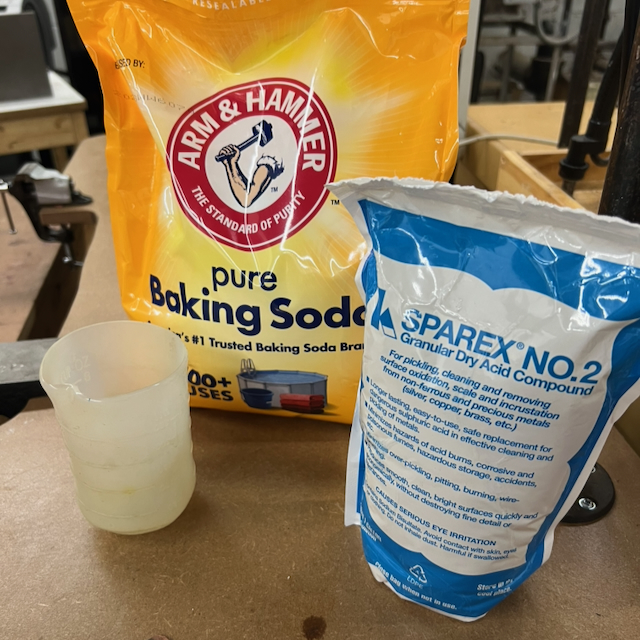
How to replenish
Wear safety goggles when mixing Pickle or cleaning solutions
Pickle
- When it no longer removes firescale, bring the cooled pot to the sink along with the neutralizer bath,
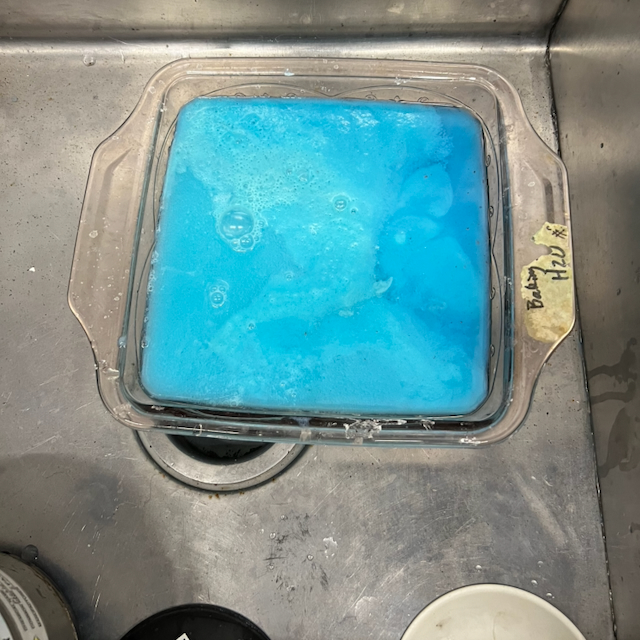
- Place the neutralizer in the sink, then gently pour the contents of the pickle pot in the neutralizer. It will get foamy.
- Add a little more baking soda till the foaming stops.
- Gently pour down the drain while running cool water along side.
- Mix new solutions.
No Comments