General Metals - Vertical Bandsaw
Manual(s)
Materials
Approved Materials and Speeds
The following table lists appropriate speeds for using the bimetal saw blades in the vertical metal bandsaw.
These speeds must be adjusted depending on the cutting fluid used; see the Notes tab for more information.
Scroll right for additional speeds.
The Google Sheet for this table can be accessed directly at the following URL:
https://docs.google.com/spreadsheets/d/1mbvCgrGWhvr8H5-HGaHIzhEWQRvGiGg8j-m4hpl9JTM/edit?usp=sharing
This link permits anyone to comment.
Member Notes
Resources
Where to obtain materials, consumables, and tooling.
Tool Tutorial
Jet 1610 Vertical Metal Bandsaw
Introduction
The Jet 1610 Vertical Metal Bandsaw is a manually fed cutting tool for cutting metals such as aluminum and mild steel. Unlike horizontal bandsaws, this machine allows users to guide the workpiece by hand, making it well-suited for contours and non-linear cuts.
This saw operates at relatively low blade speeds, which makes it effective for softer metals but unsuitable for hardened materials and stainless steels. Proper cutting technique, especially feed rate, blade speed, and use of cutting fluid is critical to prevent blade damage and ensure safe operation.
Because the cut is controlled manually, users must rely on feedback such as sound, chip formation, and temperature to maintain proper cutting conditions.
Notes
- Always use cutting fluid. Bottles for aluminum and steel are labeled nearby the machine.
- Do not adjust the high/low speed lever
- The speeds marked on the machine for steel and aluminum are starting points; you may need to adjust the speed depending on your workpiece.
Safety
- Wear safety glasses or a face shield, ear protection, and non-slip footwear.
- Remove gloves, loose clothing, or jewelry that could catch in the moving blade.
- Always adjust the blade speed with the machine running.
Common Hazards
- Contact with the blade due to improper technique or sudden movement of the workpiece during cutting
- Catastrophic failure of the blade during operation
- Burns from hot metal due to improper feed rate and/or blade speed
- Cuts from sharp edges
- Fumes from contaminants
- Embedding of metal chips
- Pinching/crushing of fingers/hands in between parts of the machine, or the machine and the workpiece
- Entanglement due to catching of fabric or worn gloves/accessories
Materials
The 18 TPI blade is best for cutting materials between 5/32" to 1/2" (4mm to 13mm). Using thinner material than recommended can result in stripping teeth from the blade.
Bi-metal band saw blades are sufficient for cutting a wide range of materials. However, the Vertical Metal Band Saw has a minimum blade speed of approximately 150 feet per minute (45 meters per minute), which limits what materials can be used for blade longevity.
Prohibited Materials
The following materials are prohibited to prolong life of the machine and blades:
- Hardened metals
- This includes plasma cut edges on any material.
- Stainless steel
- Non-metals
Parts of the Tool
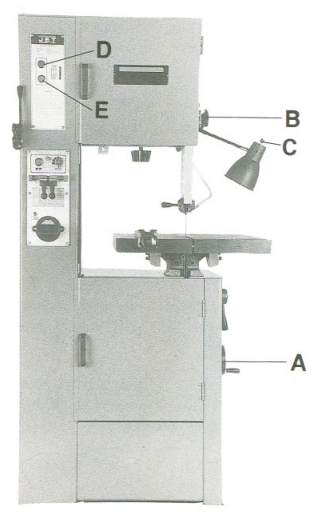
Figure 1: Vertical Metal Bandsaw Basic Anatomy
Figure 1-A: Blade Speed Adjust Hand Wheel - located below work table on right side of machine base. Turn clockwise to increase speed and counterclockwise to decrease speed. Caution: Do not turn handle while machine is stopped. Adjust speed only when machine is running.
Figure 1-B: Upper Blade Guide Lock Knob - located on right side of upper arm. Turn counter-clockwise to loosen and clockwise to tighten. Lossening allows adjustment of the blade gaurd height for cutting thicker or thinner stock.
Figure 1-C: Work Lamp Switch - on top of lamp shade; turns lamp on and off.
Figure 1-D: Start Switch - located on upper front column. Press to start the bandsaw.
Figure 1-E: Stop Switch - located on upper front column. Depress to stop bandsaw.
Basic Operation
- Determine the appropriate blade speed for the material and stock size to be cut using the chart posted on the inside of the upper pulley housing door (Also in: Setup Up).
- Adjust the blade guard to minimize exposed teeth for the stock to be cut.
- Turn on the lamp.
- Adjust fence as required for the cut.
- Press the Start Switch to start the bandsaw.
- Set the previously determined blade speed using the Blade Speed Adjust Hand Wheel.
- Apply the appropriate cutting fluid depending on the material using the labeled bottles nearby.
- Perform the cut (See: Using The Tool section below).
- Press the Stop Switch to stop the bandsaw.
Setting Up
Before cutting the material, the appropriate blade speed should be determined considering both the material and the thickness of the material. The blade speed chart is shown below:
If the material is not listed in this chart, see the section titled "Prohibited Materials".
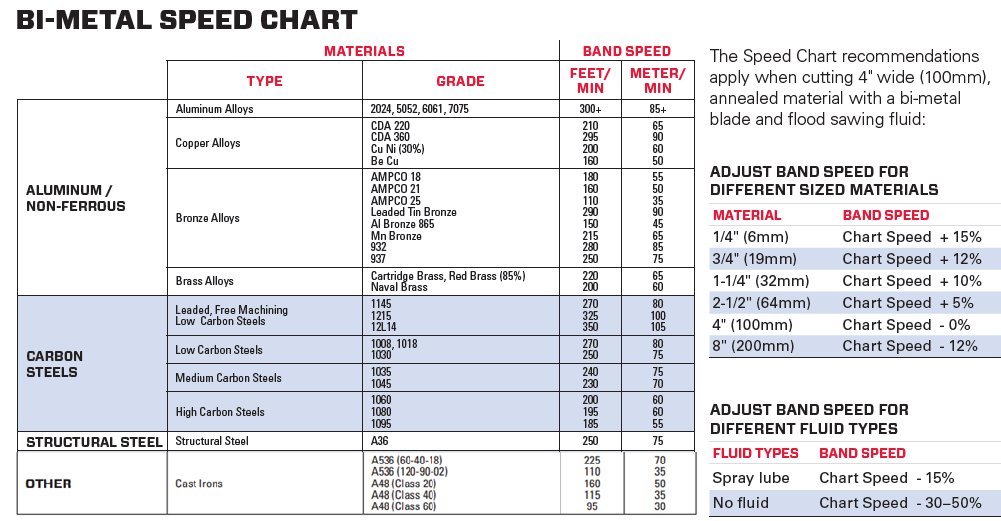
Note that these speeds should be increased for thinner materials, as shown on the right.
Using the Tool
Because the stock is fed by hand, feedback is critically important to ensure life of the tool and blade. Here are some things to look out for while making cuts:
1. Noise:
- The cut should be fairly quiet with a consistent "shhh"-ing noise, and should not feel like the blade is trying to grab the piece.
- Rubbing or squealing of the blade usually means you are feeding too slow.
- Blade chattering usually means you are feeding too fast.
2. Chips:
- For thinner workpieces, chips can be misleading because the chips are small.
- Ideal chips are thin and curled without color change.
- Dust-like / small gritty chips usually mean you are feeding to slow
- Thick chips usually mean you are feeding too fast. For steels, these chips will usually be straw (yellow) or blue colored.
- A quick reference chip guide is posted at the machine and is visible during operation.
3. Temperature:
- It is expected that the workpiece heats up during a cut, but it should never get too hot to touch.
- Heat indicates that proper chips are not forming during the cut.
- The workpiece getting excessively hot means that you are feeding either too fast or too slow.
Cleaning Up
- Clean all metal chips and cutting fluid from the table, blade guides (above and below table), and dispose in a trash can.
- Turn off the lamp.